
 Schedule Your Visit
 Donate Now
 Tuition/Programs Payment
Schechter Shavua: March 13, 2026
Schechter's Mission
 Schechter, a Jewish community day school, offers an exceptional, forward-thinking, student-centered education from early childhood through eighth grade.
We inspire students to love learning, celebrate Jewish life, connect to each other, and build a vibrant future for themselves and their community in a joyful, challenging, and creative environment.
In this issue of the Schechter Shavua , we highlight a few ways that Schechter is an exceptional , forward thinking , and student-centered Jewish community day school. Take a closer look at what sets Schechter apart!
Exceptional
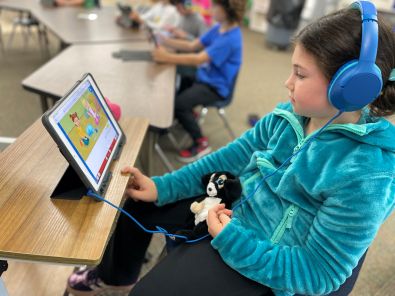 Schechter’s Hebrew program builds strong language proficiency while fostering a lasting connection to Israel, Jewish heritage, and Jewish peoplehood. Our spiraled curriculum revisits important topics across the grades while adding vocabulary and sophistication. The result: graduates are capable, confident Hebrew speakers with a meaningful connection to Israel and Jewish life.
Early Childhood students are introduced to Hebrew through joyful, experiential learning . Families are active partners in this journey, receiving tools to support Hebrew conversation at home. In Lower School, as students develop listening, speaking, reading, and writing skills, Hebrew becomes the primary classroom language. Each child is supported and challenged through small-group learning and differentiated instruction. By Middle School, students engage in immersive, topic-based units that emphasize authentic communication, vocabulary expansion, and grammar development. Assignments meet diverse proficiency levels, empowering students to take ownership of their growth. Creative projects such as film production and collaborative storytelling encourage expressive language use and build confidence.
Our Hebrew curriculum expands beyond the classroom walls; it is celebrated through school-wide milestones and community partnerships that connect our students to the global Jewish story.
Forward Thinking
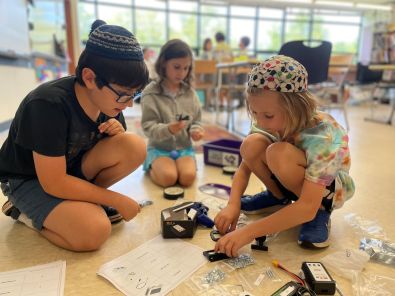 Schechter continues to thrive as a hub of innovation, creativity, and deep learning across disciplines. Nevatim students (gr. 5–6) used Makerspace ingenuity to bring Judaic studies to life by exploring the halakhot of building a kosher sukkah. After reflecting on the practical and spiritual dimensions, they designed detailed blueprints, labeled essential components, and added imaginative features, ensuring their designs remained kosher. By justifying their choices in writing and assessing their work with a rubric, students demonstrated how creativity, critical thinking, and ancient Jewish texts can come together to build deeper understanding.
We are excited that the Alim class (gr. 3-4) is piloting a two-year robotics unit in science! This year, students have been learning about the engineering design process, how robots work, and how to build and program a functional robot. We look forward to next year, when students will complete problem-solving challenges that integrate math, science, and social-emotional learning with the goal of making improvements in the world around them.
Through Middle School Social Studies, students are set on the path to help shape the future . As sixth graders learn about immigration, their lessons are reinforced with visits to significant NYC locations like the Tenement Museum and Ellis Island. Seventh graders learn about the legacy of democracy in the United States before traveling to Philadelphia to bring those lessons to life. Schechter students are poised to become the leaders of the next generation.
Student-Centered
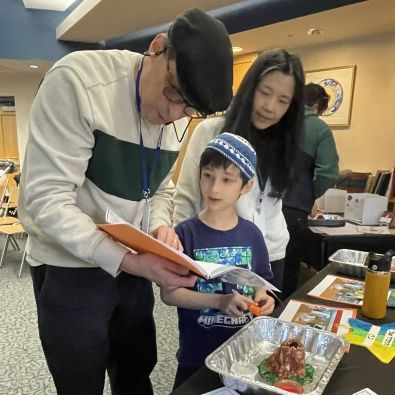 Schechter’s student-centered education is reflected across ages and disciplines. In Alim (gr. 3-4) English Language Arts, students are grouped by learning style rather than achievement level. For example, 11 students who thrive on working independently receive an initial lesson from their teacher, then collaborate with a partner to apply their learning. Meanwhile, 12 other students learn in a setting supported by three teachers, allowing for frequent check-ins and discussion. By determining how students learn best, this model ensures that every child is supported, challenged, and empowered to succeed.
Anafim (gr. 1-2) students focused on their own communities in the interdisciplinary Mi Ani unit. Armed with their imaginationsand wide array of supplies like clay, styrofoam, fabric, wood, packing peanuts, and pipe cleaners, students created scale models of their bedrooms, complete with beds, chairs, rugs, and more!
Schechter’s after-school theater program shone with a standout production of Annie, Jr., highlightingteamwork, creativity, and remarkable student growth . Cast members collaborated as a true ensemble while owning their individual roles, building confidence, deepening friendships, and celebrating the joy of achieving something special together. An added bonus: the students’ enthusiasm for the stage was infectious, leading to an uproarious student-written and directed Hanukkah play that had the audience in stitches. Schechter theater is another opportunity for students to grow, collaborate, and shine.
Jewish Community Day School
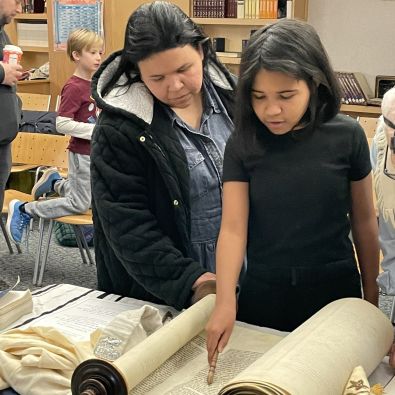 Jewish life at Schechter is filled with joy! Our Early Childhood ends each week with an adorable Kabbalat Shabbat program full of exuberant singing, dancing, and togetherness. Kindergarteners learned to lead Havdalah and shared this knowledge with their families one dark Saturday night. Our Alim students (gr. 3-4) learned new elements of the Rosh Hodesh service. A very special moment for our fifth grade students was their joyful and inspiring achievement of mastering the skills needed to read Torah: they now understand the cantillation symbols and can apply the grammar needed to pronounce and emphasize words correctly. These abilities prepare them not just to read Torah on one special day, but over a lifetime! Throughout their years at Schechter, each student is on their ownindividual journey of understanding and reciting prayers and practicing Jewish traditions and the many ways that they incorporate Mitzvotמצוות (Jewish Practice) and Chochmah חכמה(Wisdom) into their learning.
Parashat Vayakel- Pekudai: Balancing Between Giving Your All and Giving Too Much
Guest writer: Yeshiva Cohen, Ilanot (Kindergarten) teacher and Schechter graduate
At first glan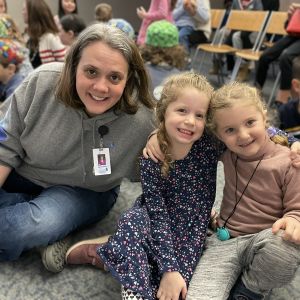 ce this week’s parshahcan feel like a laundry list of materials needed to build the Mishkan… but there were no GoFundMe’s, no Home Depots and Amazons to get the materials needed. The Israelites aren’t even in their home. They are in the desert! So we can imagine how handing over these precious belongings has the potential to burden the people. But when God asks, the people are so moved that the Torah says they give with a willingness of heart morning after morning. They bring their gold and silver. They bring their gems and their animal skins. They bring their oils and their spices. They bring it all! They bring so much that the artisans come to Moshe and ask him to tell the people to stop. It’s just too much!
On the surface, this seems like an amazing problem to have. So much unbridled giving. Using that Lev Tov --Good Heart, like we try to instill in our children, to share what they have. But when we look at it from a different angle, we can see that this is, in fact, a problem. When we give of ourselves, whether our time, our money, or our experience, if we give too much, we leave ourselves depleted. We have all had those moments when we have spent a few too many minutes with our children (even though we adore them) and now our patience is hanging by a thread, or we stay up too late finishing something that we didn’t finish earlier because a child needed our attention and now we are tired or grumpy.
We can learn from this parshah that though these moments seem fine -- after all, it’s just being a little grumpy or a little tired -- they really aren’t fine; when we run out of time for ourselves, we can’t be the best versions of ourselves, either for those around us or for our own selves. This parshahteaches us the need for balance. As adults, we need to recognize this as well as teach it to the children in our care. Yes, we all need to learn that giving with one’s whole heart and trying our very best is worthy, but knowing when to stop, when to ask for help is also important, lest one becomes destitute oneself.
As parents, educators, and others who influence the lives of children, we must recognize the importance of balance, between giving with a willing heart and giving more than we are able. We must also help the children in our care understand this lesson. When they learn that giving should come from joy, they can appreciate generosity while also understanding that there are times when it is necessary to say no—and that’s okay too.
Shabbat Shalom,
Yeshiva


CONNECT & FOLLOW US



© Solomon Schechter Day School of Greater Hartford | Site design Knowles Kreative