
 Schedule Your Visit
 Donate Now
 Tuition/Programs Payment
Schechter Shavua: May 29, 2026
Building on a Foundation: Nevatim Students (gr. 5-6) Connect with Schechter’s Early History in Contemporary Ways
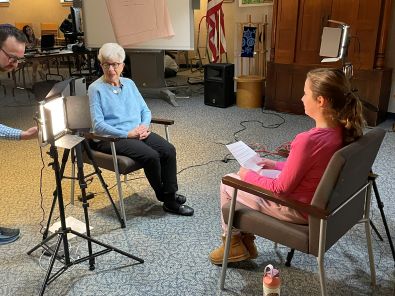 Through the Hava Dunn z”l Legacy Project, our students connected personally with stories about Schechter’s beginnings. Our founders believed deeply in the power of Jewish education to shape lives and sustain our people; they worked tirelessly to establish a place of learning, community, and connection. They secured a building, created a curriculum, and wove together the threads of education, religion, and love of Israel to create a strong foundation for all who would follow.
Nevatim students (gr. 5 & 6)explored this history, interviewing the school’s founders and exploring the world in which Solomon Schechter Day School of Greater Hartford was born. Beginning with a text study on peoplehood and place, they grounded their research in what it takes to start a new community, then explored the Jewish archives in West Hartford and learned interview skills to facilitate conversations with our school’s founders and early students. Groups collaborated to produce podcasts or Instagram reels, gaining insight into the process of creating something meaningful and lasting. Through the lenses of education, pop culture, religion, and Israel, they discovered the impact that interviewees had on Schechter and how the founders’ vision continues to shape their daily lives today. We look forward to debuting the final product of this exciting new Hava Dunn z”l Legacy Project in the spring through different media forms.
Digging Into Science: Alim Students Explore the Birth of Rocks
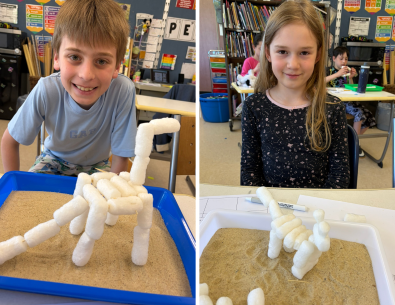 The Alim students (gr. 3–4) have been hard at work uncovering the mysteries of Earth’s history through their exciting science unit, The Birth of Rocks. As part of their learning, students explored how fossils provide important clues about how environments on Earth have changed over millions of years.
To bring this concept to life, students participated in a hands-on fossil lab that transformed the classroom into a mini paleontology workshop! Using packing peanuts and toothpicks, students constructed model animals to represent living creatures. Then came the exciting part: carefully dripping water onto their creations to observe what would happen over time.
As the packing peanuts slowly dissolved, students saw a powerful visual representation of how animal flesh decomposes after death. What remained behind were mostly toothpicks — standing in for bones that can eventually become fossilized when buried underground for thousands or even millions of years.
The activity sparked curiosity, thoughtful questions, and plenty of excitement as students connected their experiment to real fossils scientists discover today. Through hands-on exploration, the Alim students gained a deeper understanding of how fossils form and how they help tell the story of Earth’s past.
Learning truly came alive as our young scientists investigated the processes that shape our planet — one fossil at a time!
Exploring the Immigrant Experience in New York City
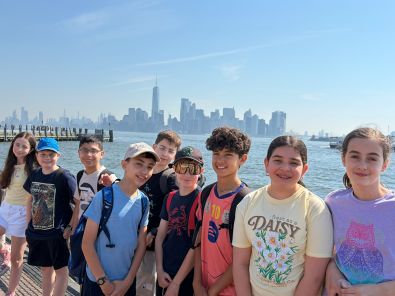 The Nevatim 6th graders recently traveled to New York City for an unforgettable educational experience that brought their study of immigration to life. Through hands-on learning, historical exploration, and meaningful reflection, students deepened their understanding of the immigrant experience in America.
The trip began with a visit to the Tenement Museum, where students learned about the Confino family, Jewish immigrants from Greece who settled in New York in the early 1900s. A highlight of the visit was the immersive experience with an actor portraying Victoria Confino, which helped students connect personally to the challenges and hopes of immigrant families. Students also toured the historic Eldridge Street Synagogue, gaining insight into the lives and traditions of Jewish immigrants on the Lower East Side. No study of immigration would be complete without visits to two iconic landmarks: the Statue of Liberty and Ellis Island. After exploring Liberty Island, students traveled to Ellis Island, where they enjoyed an engaging audio tour and spent time learning about the journeys of millions of immigrants who entered the United States there.
One especially meaningful moment took place during a Tefillah discussion, when students reflected on what prayers they might say if they were arriving in America through Ellis Island. Held on the beautiful rooftop of the hotel, the conversation encouraged students to connect emotionally and spiritually with the immigrant experience.
Of course, the trip also included plenty of fun! Students enjoyed delicious eateries, visits to neighborhood playgrounds, refreshing bubble tea stops, and an exciting outing to see Aladdin on Broadway.
The trip was a wonderful blend of learning, reflection, and community-building, and it gave students memories — and lessons — that will stay with them for years to come.
Parashat Naso—We Have to Work for It
Moving isn’t fun—whether across the country or around the corner. The packing and unpacking, the cleaning up and cleaning out, all take a 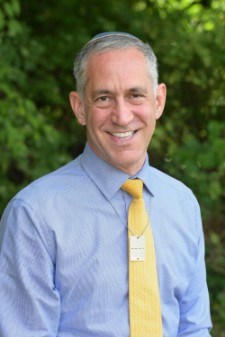 lot of time and energy. This was true for our ancestors too, and so while the Israelites may have spent 40 years in the wilderness, living in tents, they didn’t move their camp every day. It’s clear that for an entire people to make their way through the Sinai and then Jordan, a lot of work and coordination was required. Families and clans took care of their individual belongings—and the mishkan, or huge, central, portable desert sanctuary was transported by the Levites.
Towards end of this week’s parashah , we read of the jobs assigned to the different clans of Leviim. Most of the groups had ox-pulled carts to carry things like heavy fabrics and metal poles, but not the clan of Kehat. They carried the holiest objects, such as the ark and the menorah/candelabra, and the Torah says that they used poles to carry them on their shoulders—bakatef yisa’u.
We understand that those objects needed extra care. But why couldn’t the clan of Kehat use a special ox-cart with soft cushioning, perhaps a gentle fabric dyed with tekhelet /sky blue or argaman /purple? Rabbi Menachem Mendel of Kotzk, a 19th century Hasidic rebbe, wrote that “Working in service of holiness requires special effort. “Bakatef yisa’u”: all of one’s strength must be harnessed together. Not even a single spark of holiness is easily earned.”
The end of the school year is weeks away, and I hope that like me, when you look at your children now, and compare them to where they were at the start of the school year, you see tremendous growth. They have acquired skills and knowledge, built relationships, and created meaning. They have also learned to respect others, and act with kindness; in so many meaningful ways, they have gained sparks of holiness.
Our teachers worked hard to nurture those sparks—but the hardest workers of all have been our students, your children. As you celebrate their growth, I hope you will keep in mind the Kotzker rebbe’s words! They have harnessed so much strength to earn that holiness.
Wishing you a Shabbat shalom,
Rabbi Jonathan Berger
Head of School
Questions for the Shabbat table:
- How do you think the clan of Kehat felt about their job? Jealous of their brethren who used carts? Proud? And how did it feel to pack up the golden menorah?
- Of all your learning and growth, what took the most work?

Mazal tov to Schechter's class of 2022!
We are excited to watch you blaze new trails into adulthood!

CONNECT & FOLLOW US


© Solomon Schechter Day School of Greater Hartford | Site design Knowles Kreative